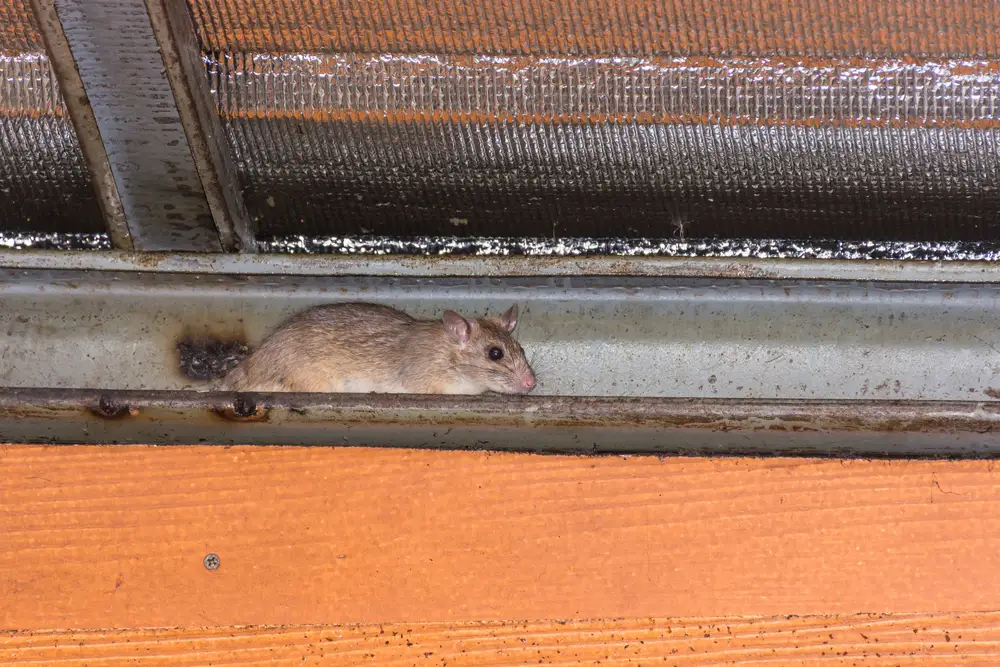
Roof rats are black, about 16 inches total. Pack rats are brown and similar in size. Both inhabit attics and roofs. Proper identification is key to effective removal.
Rat nests carry diseases like salmonella, bubonic plague, and hantavirus. Professional removal ensures your family's safety. Free inspections available.
The roof rat is black in color, about 6-8 inches long each for the body and tail for a total of about 16 inches, and inhabits attics and roofs of buildings when they can. They are omnivores and will eat pretty much anything that's around for them to eat including meat, seed, and vegetation.
The pack rat is brown in color and similar in size to the roof rat. It also likes to inhabit attics and tall places because that is where they hide in their natural environment. Pack rats are vegetarians and primarily eat vegetation and twigs, but Mexican pack rats enjoy acorns, cactus, and seeds.
Rats are dangerous to humans because they carry disease when out in the wild. Their nesting areas are extremely dangerous to handle due to the presence of their fecal matter and urine, which carries diseases such as salmonellae. Roof rats are also carriers of bubonic plague and hantavirus. Fleas that feed on rats can carry disease to humans as well.
The best way to remove them is to take preventive measures and stop them from coming in. Make sure that any ventilation holes into your attic from outside are covered with thick mesh wire. Seal all ducting and any other wood seams with caulk. Inspect your home a few times a year for new damage or holes that may appear from animals trying to enter your home.
Rats and rat nests can be dangerous to remove due to the diseases they can carry. We strongly recommend that you call a professional. Call us today if you suspect a rat problem. We will inspect your home for free, and when we find your suspects we will let you know what we found and what we need to do to remove them.