When the evenings cool off, pigeons go looking for a warm, sheltered place to spend the night, and across the East Valley many of them settle on residential rooftops. If you’ve noticed more birds lining your roof ridge, crowding your patio cover or huddling beside your rooftop AC unit, you’re not imagining it. Lasting pigeon control in Mesa, AZ starts with understanding why winter pigeon roosting happens and why the mess builds so fast.
Here at Rid-a-bird, we’ve been helping Valley homeowners and businesses with bird problems since 1991. Every winter we see the same pattern. A few birds become a flock, droppings pile up on tile, stucco and metal, and the cleanup and health concerns grow with them.
Below, we’ll cover why pigeons move onto rooftops when temperatures drop and where they like to roost. We’ll look at what their droppings cost you, the health risks for families and pets, and why fake owls and shiny tape rarely work. Then we’ll explain how our pigeon exclusion process stops the problem, backed by a lifetime warranty on our bird work.
Why Pigeons Move Onto Mesa Rooftops When Temperatures Drop
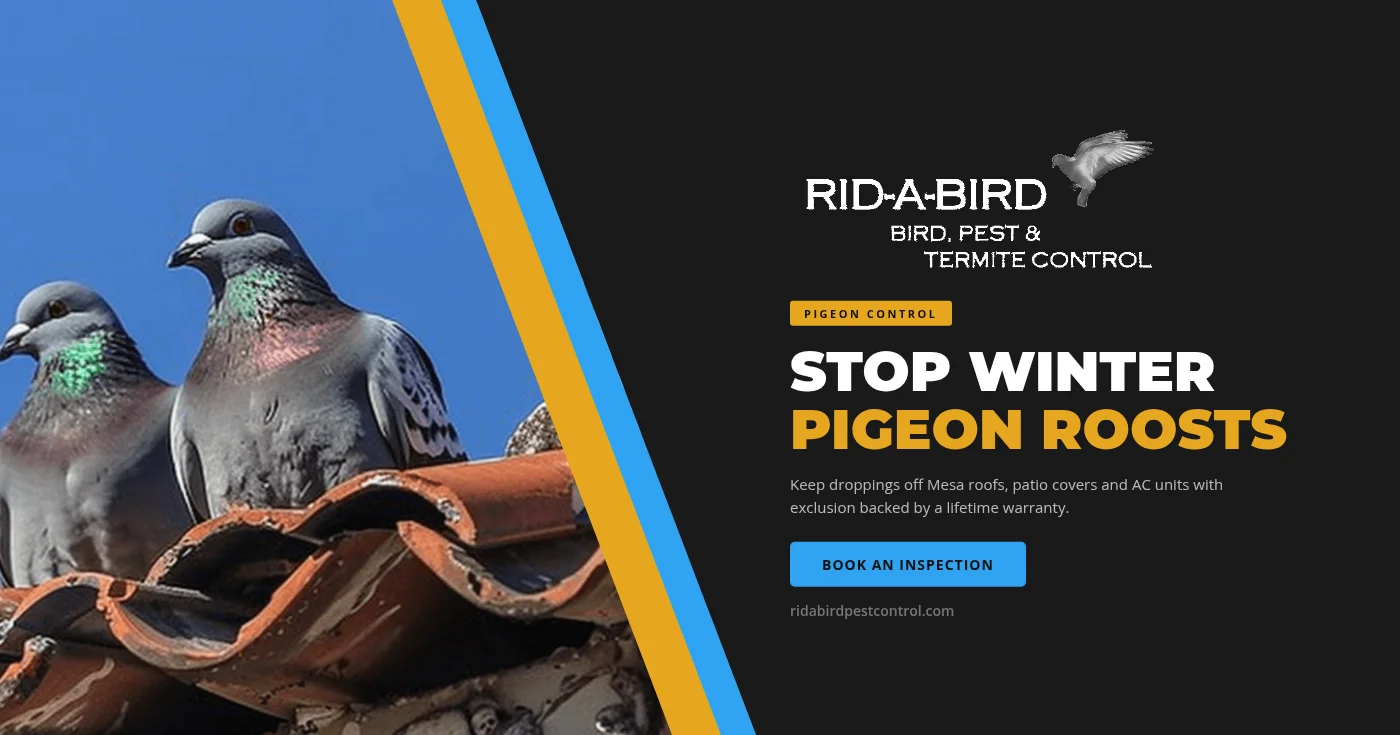
Rock pigeons evolved as cliff dwellers, and to a pigeon, a home with a tile roof looks a lot like a cliff full of ledges. In summer, birds can rest almost anywhere. Once fall arrives, Valley nights typically cool into the upper 40s or low 50s, and pigeons start hunting for spots that block the wind and hold the day’s warmth.
Roofs do both. Tile absorbs sun all afternoon and gives off heat after dark. The gaps under tiles, the space beneath solar panels and the corners around rooftop AC units all work as windbreaks. Spilled birdseed, pet food left on patios and open trash bins give the flock a reason to stay close.
Winter isn’t a break from breeding, either. The University of California’s Integrated Pest Management program notes that pigeons can breed year-round where the climate allows. They usually lay two eggs per clutch and can raise several broods a year. Pigeons are also loyal to their roosts, so once they choose your roof, they keep coming back. In our desert climate, a pair that settles in during November can become a much larger group by spring. That makes winter the right time to act.
Where Pigeons Roost on Mesa Homes: Tile Roofs, Patio Covers, Ledges and Rooftop AC Units
Every home is a little different, but when we inspect properties around the East Valley, the same hot spots show up again and again.
Tile Roofs
Concrete and clay S-tile roofs are everywhere in our area, and pigeons love them. The open ends of the tiles along the eaves, often called the bird stop area, leave curved openings just the right size for a pigeon to squeeze into. Under those tiles, birds find shade in summer, warmth in winter and a sheltered place to nest. You might see twigs and feathers poking out from the roof edge, or hear cooing and scratching overhead early in the morning.
Patio Covers and Ledges
Flat-topped patio covers, pergolas and the ledges above garage doors and windows give pigeons a wide perch. These spots usually sit right above the places your family spends time. Droppings end up on patio furniture, grills, walkways and pool decks. Stucco pop-outs and parapet walls work the same way.
Rooftop AC Units and Solar Panels
Pigeons roosting on rooftop AC units is one of the most common winter calls we get. The housing blocks the wind, and the equipment gives off a little warmth. Birds tuck into the gaps around the base, the ductwork and the condenser. Rooftop solar arrays offer similar shelter, because the space between the panels and the roof is covered, shaded and hard for predators to reach. Once nesting material builds up under an array, clearing it out takes the right equipment.
The Hidden Costs of Pigeon Droppings: Roof Damage, Clogged Gutters and Corroded AC Equipment
It’s easy to see droppings as a cosmetic problem, but over time they cost homeowners money.
Pigeon droppings contain uric acid, which makes them acidic. Left in place, they can stain and wear down paint, stucco, roof coatings and metal flashing. The longer a build-up sits, especially when it gets wet and dries again and again, the harder it is to remove without leaving marks.
Gutters and roof drains are another weak point. Nesting material, feathers and droppings collect in gutters, downspouts, scuppers and flat-roof drains. Our winter rains are usually light, but even a short storm can wash that debris into drainage points and block them. Then water can pool on a roof or patio cover.
Rooftop AC equipment takes a beating too. Condenser coils need clear airflow to run efficiently, and debris on the coils can make the system work harder. Droppings and nest material around the unit may also corrode metal housings and fasteners over time. We can’t put a number on the damage for every home, but we regularly find units caked in droppings that clearly weren’t helping performance.
For businesses, droppings near entrances can turn customers away and create slip hazards. If you manage a storefront, office or multifamily property, our commercial pigeon control team handles larger buildings, too.
Health Risks of Pigeon Droppings for Families and Pets
The health risks of pigeon droppings on a patio aren’t cause for panic, but they deserve attention. Pigeon droppings and the soil beneath roosts have been linked to fungal and bacterial diseases, including histoplasmosis, cryptococcosis and psittacosis. Public health guidance says people usually catch these by breathing in dust from dried droppings that have been disturbed, not from simply touching them.
Most healthy adults face a low risk. People with weakened immune systems, older adults and anyone with lung conditions may face a higher one. If someone in your home falls into one of those groups, keep them away from heavy build-ups and talk with a doctor if you have concerns. Kids and pets who play on patios or dig in flower beds beneath a roost can come into closer contact with droppings than adults do. Pigeon nests can also harbor mites and other parasites.
That’s why pigeon droppings cleanup should never start with a dry broom or a leaf blower. NIOSH guidance on histoplasmosis recommends wetting droppings before removal to keep dust down, and using proper respiratory protection for large accumulations. For a small spot on patio furniture, disposable gloves, a light misting of water and a careful wipe are usually reasonable. For thick layers on a roof or under solar panels, we recommend calling a professional crew with the right gear.
Why DIY Deterrents Like Fake Owls and Shiny Tape Fail Against Persistent Pigeons
We understand the appeal of a quick fix. Plastic owls, rubber snakes, reflective tape and spinning pinwheels are inexpensive and easy to put up. The problem is that pigeons learn fast. After a few days of seeing an owl that never moves, the birds figure out it’s no threat, and some will even perch on top of it. UC IPM’s pigeon guidance makes the same point: scare devices tend to give short-term results at best because birds get used to them.
Store-bought spikes and netting can work, but only when they’re installed correctly. If spikes leave gaps, birds settle between them, and debris caught in spikes can become a base for a new nest. Sagging netting or netting with openings can trap birds instead of keeping them out. Climbing a tile roof to do the work yourself also risks cracked tiles and falls.
Then there’s the legal side. Rock pigeons are non-native and aren’t protected under the federal Migratory Bird Treaty Act. The mourning doves and white-winged doves common across the Valley are protected, though. The two can look similar from a distance and sometimes nest in the same places, so removing nests or eggs without knowing the difference can cause real trouble. We always identify the species first and plan our work so it doesn’t harm protected doves. Poisons and sticky products are a bad idea for the same reason, because they can affect non-target birds, pets and wildlife.
How Rid-a-bird’s Pigeon Exclusion Works, Backed by a Lifetime Warranty on Bird Work
Pigeon exclusion means physically blocking birds from the places they want to roost and nest. University extension experts favor this approach because it deals with the root of the problem instead of trying to scare birds away. Here at Rid-a-bird, our residential bird control and removal process follows four steps.
1. A Thorough Inspection
We check your roof, eaves, patio covers, ledges, AC units and solar arrays to find every roost and nest, confirm the species and note any damage. Our team holds OSHA certification and Arizona state certification in pest and termite work.
2. Cleanup and Sanitization
Before we seal anything, we remove nests and droppings with wet-cleanup methods that keep dust down. Then we clean and sanitize the affected areas.
3. Custom Exclusion
Every home gets a plan built around its layout. Depending on what we find, that may include:
- Tile end closures (bird stops) that seal the open ends of S-tile along the eaves
- Solar panel screening around the array’s edges; learn more about our solar panel bird protection
- Bird netting for patio covers, courtyards and recessed areas
- Properly spaced spikes and bird slope for ledges, beams and parapets
- Exclusion around rooftop AC units and ductwork
If you’ve been wondering about pigeon netting and spikes for Mesa homes, we’ll show you what we recommend, and why, before any work starts.
4. Our Lifetime Warranty
Pigeons are persistent, so we back our bird work with a lifetime warranty. That gives you peace of mind long after we pack up. Just ask us for the details during your visit.
Frequently Asked Questions About Winter Pigeon Control in Mesa, AZ
Why are there more pigeons on my roof in winter in Mesa?
Cooler nights send pigeons looking for warm spots out of the wind, and roofs, AC units and solar panels fit the bill. Pigeons in warm climates also keep breeding through winter, and they return to the same roost once they settle.
Are pigeon droppings dangerous to my kids or dog?
For most healthy people the risk is low, but dried droppings can carry fungi and bacteria that become airborne when disturbed. Keep kids and pets away from heavy build-ups, avoid dry sweeping and call a professional for large accumulations. If you have health concerns, check with your doctor or veterinarian.
Is it legal to remove pigeons and their nests in Arizona?
Rock pigeons aren’t protected under the Migratory Bird Treaty Act, but native doves are. Because the two can look alike, it’s best to have a professional identify the birds before anyone touches a nest.
Will exclusion damage my roof tiles or solar panels?
We install our materials with care to avoid damaging tiles or panels. Solar warranty terms vary by manufacturer and installer, so we suggest checking yours. We’re happy to talk through your setup during the inspection.
Get Lasting Pigeon Control in Mesa, AZ Before the Flock Grows
Winter pigeon roosting doesn’t fix itself. The longer birds stay, the more droppings pile up and the harder they are to move along. Here at Rid-a-bird, we’ve been protecting homes and businesses since 1991. Whether you need pigeon removal in Mesa or bird control in Chandler, Gilbert, Scottsdale or Phoenix, check our areas we serve for the full list. We also offer military discounts as a thank-you for your service.
If you’re ready for the kind of pigeon control Mesa AZ homeowners can count on, contact Rid-a-bird to schedule your inspection. We’ll get your roof, patio and AC unit back to bird-free, and our lifetime warranty will keep it that way.
Who Can I Call for Pigeon Control in Mesa, AZ?
Here at Rid-a-bird, bird work has been at the heart of what we do since 1991. We help homeowners and businesses across the Valley keep pigeons off roofs, patio covers, rooftop AC units and solar panels with humane exclusion that’s built to last.
When you call us, here’s what you can expect:
- A detailed inspection that pinpoints every roost, nest and entry point and confirms the species before any work begins.
- Thorough cleanup and sanitization of droppings and nesting material, using wet methods that keep dust down.
- Custom exclusion, including tile end closures, solar panel screening, bird netting, spikes and bird slope.
- A lifetime warranty on our bird work, so you have peace of mind if pigeons try to return.
- Certified technicians with OSHA certification and Arizona state certification in pest and termite work.
We also protect larger properties through our commercial bird control services, from storefronts and warehouses to multifamily communities. As a thank-you to those who’ve served, we offer military discounts. Beyond birds, our general pest control covers everything from scorpions and roaches to rodents.
If pigeons have claimed your roof this winter, reach out to our team to schedule an inspection. We’ll show you exactly what’s attracting the birds and how we’ll keep them out for the long haul.