
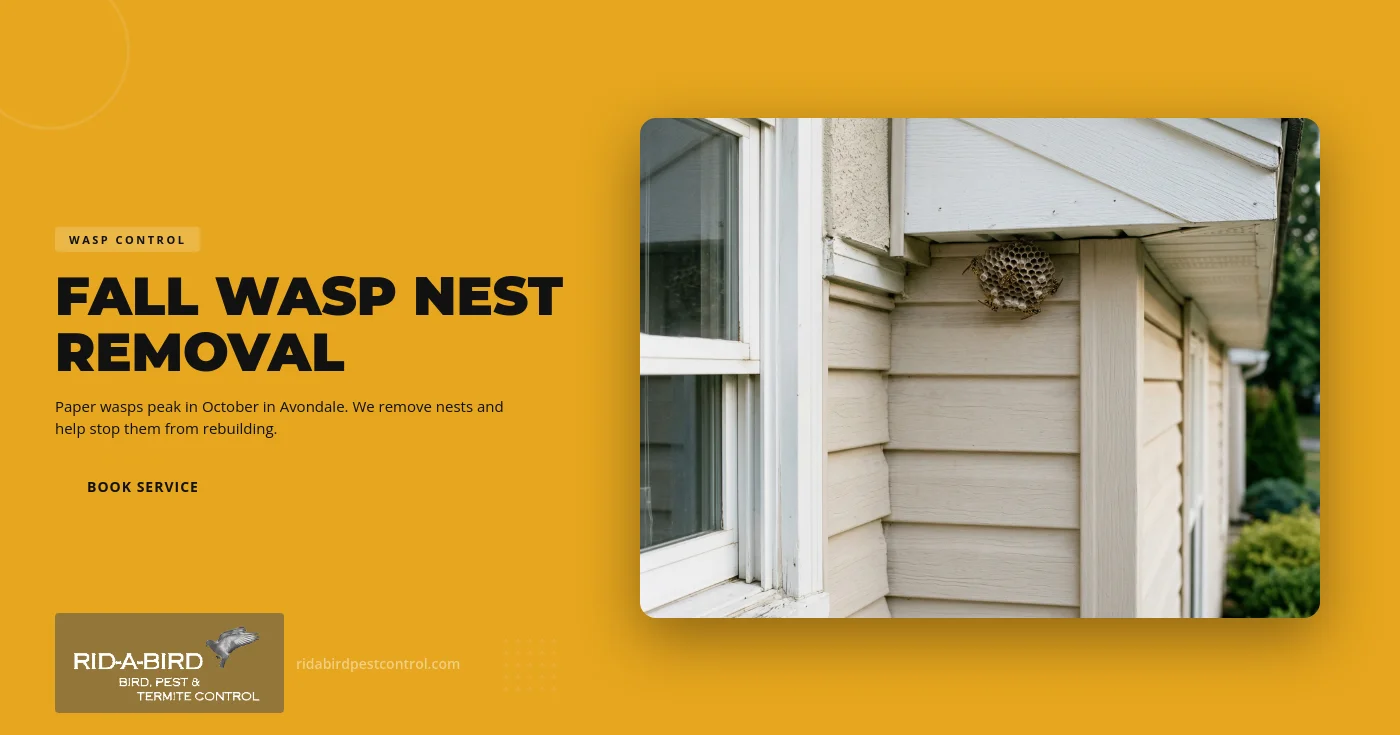
You climb a ladder to hang Halloween lights along the patio cover, and a handful of slender, long-legged wasps drift down from a gray paper comb you never noticed in July. It’s a familiar October moment in the West Valley, and it’s exactly when calls for wasp nest removal in Avondale start to climb. The nest that held one queen in spring may now hold dozens of defensive workers.
Fall feels like a reprieve. The heat finally breaks, patios fill up with family dinners and football parties, and kids spend more time outside. Wasps haven’t gotten the memo. Warm afternoons keep colonies active, so nests under eaves, patio covers and block walls are often at their largest just when we’re spending the most time near them.
Here at Rid-A-Bird, we’ve provided bee and wasp removal across the West Valley since 1991. If you’re weighing wasp control in Avondale, AZ, this guide explains why paper wasps turn aggressive in October, how to tell wasps from bees, where nests hide, why DIY removal is riskier in fall and how we help prevent rebuilding.
Why Wasp Colonies Peak in Avondale During October
Social wasps run on a yearly cycle, and October sits near the end of it. Knowing that cycle explains much of what you’re seeing on your patio.
The Paper Wasp Colony Life Cycle
In spring, a single mated queen starts a small comb and raises the first workers herself. Through summer, those workers take over foraging and building, and the colony grows steadily. According to UC IPM’s Pest Notes on yellowjackets and other social wasps, colonies reach their largest size in late summer and fall. Late in the season, the nest shifts to raising new queens and males. Afterward, the workers die off and the mated queens look for sheltered cracks to spend the winter.
Why Fall Wasp Activity in Arizona Feels More Aggressive
Wasps don’t suddenly turn mean, but several factors line up to make stings more likely:
- More defenders. A comb the size of a coin in April can be the size of a saucer by fall.
- More to protect. The colony is raising next year’s queens, and workers react quickly to bumps, shadows and vibration near the nest.
- Shifting food sources. As natural food runs short, yellowjackets in particular switch from protein to sugar and start investigating sodas, fruit and trash cans.
- A long warm season. October highs in the low desert typically reach the upper 80s to low 90s, so local colonies stay busy longer than they would in colder states.
Paper Wasps vs. Yellowjackets vs. Bees: Identifying What’s Nesting at Your Home
Knowing what’s living in a nest determines the right approach, and a wrong guess can turn a simple job into a dangerous one. Here’s how the three most common culprits compare:
- Paper wasps: Slender and narrow-waisted, with long legs that dangle in flight. Several species live in the region, including the Arizona paper wasp. Their nests are open, umbrella-shaped combs with visible cells, hanging from a single stalk under an overhang. They’re usually less aggressive unless the nest is disturbed.
- Yellowjackets: Stockier and quicker, with bold yellow-and-black bands. They build enclosed paper nests, often underground or inside wall voids, so you may only see insects streaming in and out of a hole. They appear to be less common in the low desert than in cooler regions, but they do show up.
- Honey bees: Fuzzy, golden-brown and rounder. They don’t build paper nests. Instead, they form hanging swarms or build wax combs inside walls, meter boxes, sheds and trees.
How to Tell a Wasp Nest From a Bee Hive
Gray, papery, open cells usually mean paper wasps. Wax comb, a buzzing cluster or a steady flow of fuzzy bees into a gap usually means bees. That difference matters: Africanized honey bees are well established in Maricopa County and can defend a colony in large numbers. The University of Arizona Cooperative Extension offers guidance on recognizing and avoiding them. If you suspect bees, don’t spray them, keep kids and pets away and call for professional bee removal instead.
Where Wasps Build Nests Around Avondale Homes: Eaves, Patio Covers, Block Walls and Irrigation Boxes
Paper wasps look for three things: shelter from sun and wind, a sturdy surface to hang a comb from and water nearby. Local homes offer all three. These are the spots we check most often:
- Stucco eaves and soffits. The shaded corner where the fascia meets the wall is a classic nesting spot, especially on the north and east sides of a house.
- Patio covers. Alumawood, lattice and wood covers have dozens of beams and channels where combs stay hidden until someone walks underneath.
- Block walls. The caps and hollow cells of CMU walls, plus gaps around gates, create protected cavities. Wasp nests in block wall gaps and eaves are among our most common fall calls.
- Irrigation and valve boxes. Meter boxes, backflow covers and sprinkler valve boxes stay shaded and slightly damp. Lifting a lid without looking first is a common way people get stung.
- Light fixtures, AC units and play equipment. Any hollow tube or overhang can hold a nest, including swing set frames and outdoor light housings.
Water is a big draw, too. Misters, drip lines, pool edges and leaky hose bibs give foraging wasps an easy drink, so nests often end up a short flight away. If you run a mister system, take an extra look at the patio cover above it.
The Risks of DIY Wasp Nest Removal in the Fall
It’s tempting to grab a can of spray and knock the nest down yourself. For a tiny spring nest out in the open, some homeowners manage it. By October, the math changes.
Why Fall Nests Are Harder to Handle
- Multiple stings. Unlike honey bees, wasps can sting more than once, and a large fall colony can send many defenders at once.
- Ladder work. Most nests sit above head height. Swatting at wasps from a ladder is how a sting turns into a fall.
- Hidden nests. One visible comb may be one of several on the same wall, or a yellowjacket nest may be tucked inside a void.
- Misidentified bees. Spraying what turns out to be an Africanized bee colony can provoke a massive defensive response.
- Product drift. Overhead spraying in a breeze can carry product onto patio furniture, plants and pet bowls.
What About Spraying at Night?
Night treatment is common advice because wasps are less active after dark. It may lower the risk, but it doesn’t remove it. Wasps still respond to flashlights and vibration, and climbing a ladder in the dark brings its own hazards. If anyone in your home is allergic to stings, skip DIY entirely and call a wasp exterminator in Avondale.
Know the warning signs as well. The CDC notes that trouble breathing, swelling of the face or throat and dizziness after a sting can signal a severe allergic reaction. Anyone with those symptoms should call 911 right away.
How Rid-A-Bird Handles Wasp Nest Removal in Avondale and Prevents Rebuilding
Our goal isn’t just to knock down a nest. It’s to deal with the active colony, clean up the attachment point and lower the chances that wasps pick the same spot again. A typical visit looks like this:
- Inspection and identification. We walk the property, check eaves, patio covers, block walls and irrigation boxes, and confirm whether we’re dealing with paper wasps, yellowjackets or bees.
- Targeted treatment. Our technicians wear protective gear and apply professional products carefully to the active nest, limiting drift onto your patio, plants and pet areas.
- Nest removal. Once the colony is no longer active, we take down the comb. Old paper left in place can encourage returning wasps to rebuild nearby.
- Attachment point treatment. We address the surfaces where nests hung and other likely spots to discourage new building.
- Prevention advice. We point out gaps, weep holes and open block cells that could shelter overwintering queens.
Paper wasp nest removal is often part of a bigger picture. Wasps share sheltered spots with spiders, scorpions and other pests, and our general pest control service covers the whole property on a regular schedule, so new nests get spotted while they’re small. If our inspection turns up bees instead, we handle that colony with the different approach it requires.
No treatment can promise wasps will never return, especially with new queens on the move, but thorough removal plus a little prevention goes a long way.
Fall Yard and Home Prep to Keep Wasps Away Through Winter
Overwintering queens are next spring’s nest builders. A little effort now can mean fewer combs later.
- Seal cracks and gaps. Caulk openings around eaves, light fixtures and utility lines, and consider screening weep holes and capping open block wall cells.
- Manage food and trash. Keep bin lids tight, rinse soda cans and cover food at outdoor gatherings.
- Fix leaks. Repair dripping hose bibs, misters and irrigation lines so wasps have fewer easy water sources.
- Check before you lift. Look at irrigation box lids, grill covers and stored cushions before handling them.
- Walk the perimeter monthly. A golf-ball-sized nest in spring is far easier to handle than a mature fall colony.
- Trim back shrubs. Dense plants against the house hide nests and give wasps a sheltered path to the walls.
Not every nest has to go. Paper wasps prey on caterpillars and other garden pests, so a small nest far from doors, walkways and play areas may be worth leaving alone. When a nest sits where people live and play, removal makes sense.
Frequently Asked Questions About Fall Wasp Nest Removal in Avondale
Why are there suddenly so many wasps in October?
Colonies are at peak size, new queens and males are emerging and natural food is getting scarcer. Warm fall weather keeps them active, so you notice them more just as you spend more time outdoors.
Do wasps die off in winter in Arizona?
Most workers die as the season winds down, but mated queens survive by hiding in sheltered cracks. In our mild climate, you may still see some activity on warm winter days, and those queens start new nests in spring.
Will wasps come back to the same spot after a nest is removed?
They can. Sheltered spots that worked once tend to attract wasps again. Removing the old comb, treating attachment points and sealing nearby gaps all help lower the odds of rebuilding.
How much does wasp nest removal cost in Avondale?
It depends on how many nests you have, where they are and whether any are hidden in walls or voids. Reach out and we’ll talk through your situation and pricing.
Book Fall Wasp Nest Removal Before Your Next Gathering
October is when wasp colonies are biggest and most defensive, and it’s also when your patio finally feels inviting again. If you’re seeing paper wasps under the eaves, along the block wall or near an irrigation box, let a professional handle it. Here at Rid-A-Bird, we’ve served homeowners across greater Phoenix and the West Valley since 1991, from Glendale and Peoria to Goodyear and Litchfield Park, and we know where local wasps like to hide.
Ready to enjoy your yard again? Contact us to schedule wasp nest removal in Avondale, and we’ll help you reclaim your patio this fall.
Can You Remove the Wasp Nest Under My Patio Cover This Fall?
Yes, and fall is one of the most important times to do it. By October, paper wasp colonies are at their largest, and nests tucked under eaves, patio covers and block walls can hold dozens of defensive workers. We’ve been helping homeowners across greater Phoenix and the West Valley with stinging insects since 1991, and we know where local wasps like to build.
When we visit, we focus on more than just knocking a nest down:
- Inspection and identification so we know whether we’re dealing with paper wasps, yellowjackets or bees
- Careful, targeted treatment of active nests using professional products and protective gear
- Nest removal and treatment of attachment points to discourage rebuilding
- Prevention tips for sealing gaps and block wall openings where queens overwinter
If what you’re seeing turns out to be bees rather than wasps, we’ll handle that colony with the different approach it needs. Please don’t spray a bee colony yourself, especially with Africanized bees so common in our region.
We can also fold wasp checks into regular pest service, so new nests get caught while they’re still small and easy to handle. That way you can enjoy cooler evenings outside without dodging wasps every time you open the patio door.
Want the full picture on why wasps turn aggressive in October and how to keep them away through winter? Read our complete guide to fall wasp nest removal.